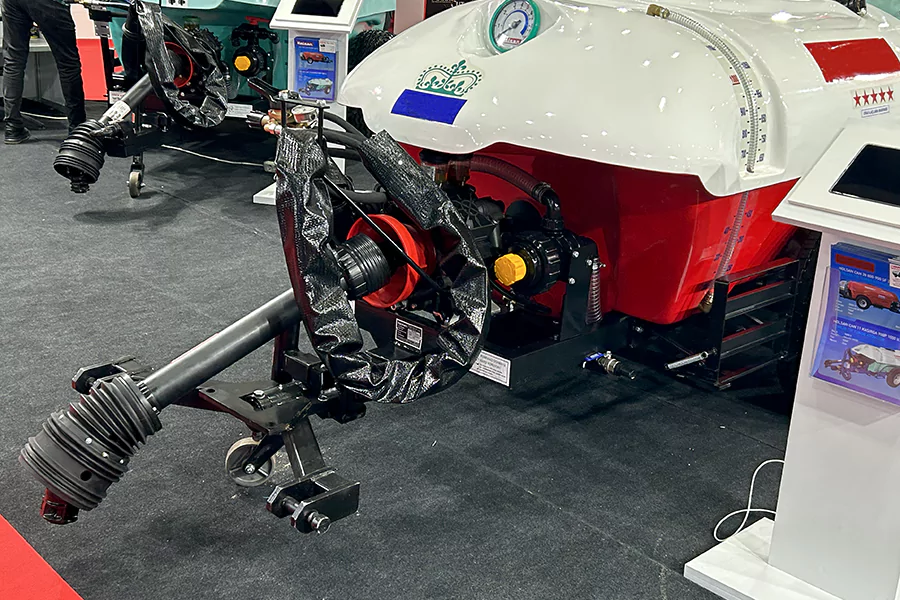
The proper installation of a coupling plays a important role in ensuring smooth mechanical transmission and long-term operational reliability. One of the critical steps during installation is selecting an appropriate heating method for expanding the PTO coupling bore. It allows to be mounted onto the shaft with minimal force and maximum precision.
Different heating techniques
Let’s discuss the first situation. In cases where larger couplings are involved, using an oxygen-acetylene flame or a gas torch can be effective. Of course, this method demands skill to avoid overheating or damaging the metal surface. For better control and efficiency, technicians often combine multiple torches when heating large coupling units.
The second situation is when the coupling size is small (inner diameter less than 100mm), immersion heating can be used. Because it offers uniform temperature distribution and is relatively easy to perform.
The third situation applies to electric heating, especially induction heating. It is considered more precise and reliable, though it may be limited in field environments due to equipment constraints. Still, for medium to large couplings, using low-voltage, high-current induction coils at the standard power frequency (50Hz) is a viable solution. This setup ensures deeper heat penetration and effective expansion without compromising the structural integrity of the component.

Other challenges in coupling installation
Several challenges may arise during the coupling installation process. One common issue is driveshaft misalignment, which prevents the coupling from sliding onto the shaft as intended. To address this, it is crucial to ensure the shaft and the coupling hole are properly aligned before applying force. Initial taps should be light and carefully positioned, especially during the early stage of fitting. Once the coupling has slid in partially (about one-third of the way), firmer impacts can be applied if necessary.
Other potential complications include the hoisting chain slipping, backward movement of the support pulley, or even insufficient fuel supply if using flame heating. It is always advisable to prepare thoroughly—checking all tools, fuel sources, and safety equipment ahead of time to avoid such incidents.
Additionally, if any precision components—such as bearings or mechanical seals—have already been installed on the shaft, one must avoid striking the coupling forcefully. Any excessive force can lead to irreversible damage to those sensitive parts, which could compromise the entire assembly.
In summary
While the coupling installation process may seem straightforward, it involves multiple considerations including heating methods, shaft alignment, safety precautions, and component protection. With proper planning and careful execution, you can ensure the coupling is installed securely and functions reliably in your machinery.