Picking an agricultural chain isn’t about grabbing one that looks close to the old one. In farm machinery, a chain that’s a hair off on pitch wears fast, runs loud, and lets you down right in the middle of harvest. That’s the worst possible time for a drive to quit.
Pitch is the first spec to check, but it’s not the whole story. The right chain depends on the machine, the load it pulls, the speed it runs, the sprockets it rides on, and what kind of dirt it works in.
What chain pitch actually is
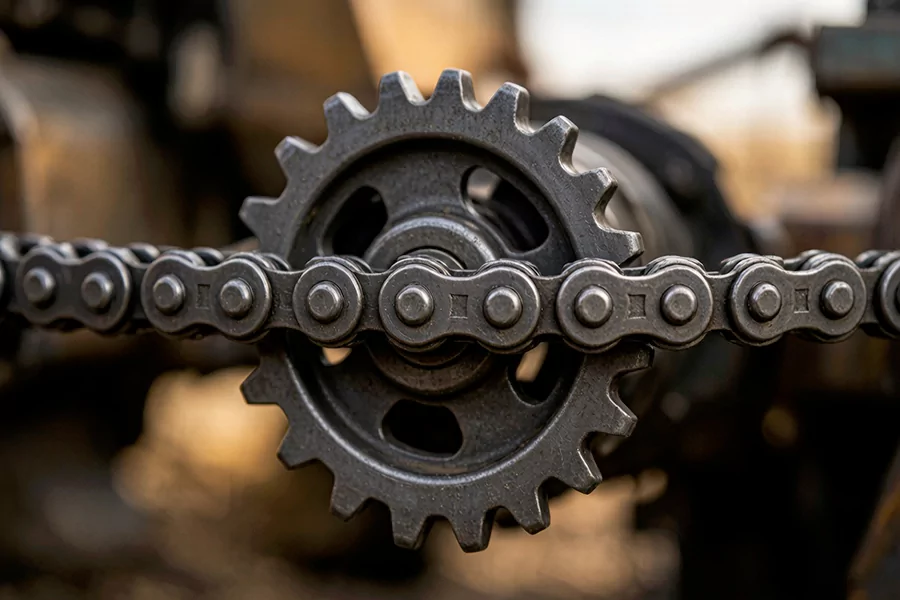
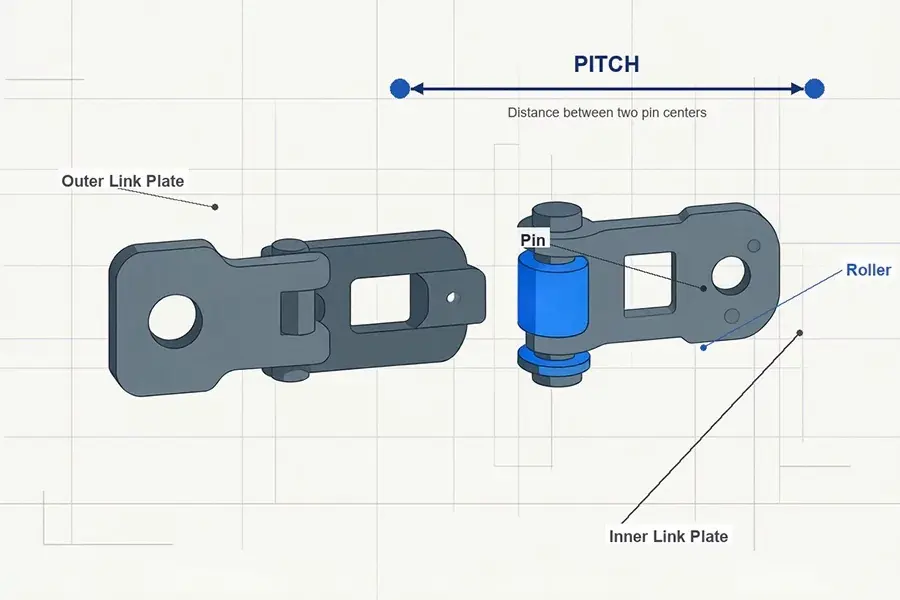
Pitch is the distance between the centers of two adjacent pins. It’s the number that decides whether a chain will seat properly in a sprocket.
On the ANSI side, the common sizes are #40, #50, #60, and #80, running 1/2″, 5/8″, 3/4″, and 1″ pitch. Metric and ISO chains use their own dimensions, set out in ISO 606 for short-pitch roller and bush chains and their sprockets.
Pitch isn’t just a measurement you take on the chain. It’s half of the fit between the chain and the sprocket it drives. Get either side wrong and the pair doesn’t work.
Start from the original chain
The safest place to start is what the machine shipped with. The parts book, the service manual, or the number stamped on the old chain.
If you’ve got the original spec, check:
- Chain number or ISO designation
- Pitch
- Roller diameter
- Inside width
- Pin diameter
- Number of strands
- Length
Farm equipment runs standard roller chain, double-pitch chain, and chains made specifically for agriculture. They can look the same on a shelf and not be interchangeable. A chain that matches on pitch but not on roller diameter or inside width will chew up a sprocket.
Match the chain to the sprocket, not just the pitch
Chain and sprocket are one system. You don’t fix one and ignore the other.
A sprocket is cut for a specific chain geometry. Wrong pitch, and the rollers won’t sit between the teeth the way they should. It might go on, but it’ll load unevenly and wear out fast.
This bites hardest when you hang a new chain on an old sprocket. A worn sprocket has a tooth profile that’s already changed. Put a fresh chain on it and the new chain inherits the old sprocket’s problems and dies early.
Check the chain dimensions and the sprocket condition before you order. Not one or the other.
Bigger pitch isn't automatically better
It’s tempting to think a bigger, heavier chain is the safer call. Not always.
Pitch up, and the chain gets stronger but also heavier and needs more room. The right chain carries the load the machine actually sees. Not the biggest one that fits.
Load matters here because farm equipment doesn’t pull a steady load. A baler, a feeder, a conveyor, a combine table. They all grab and release. A slug of crop hits the chain and it’s a shock load, not a constant one. Size for the peak, not the average.
Speed changes the answer
Pitch and speed pull against each other.
A bigger chain is stronger, but it’s also heavier, and at speed that extra mass slaps harder as it engages and leaves the sprocket. For a drive that runs fast, a smaller pitch often runs smoother and packs tighter.
Most ag machinery runs slow and pulls hard, so a heavier chain makes sense there. On a compact drive that spins, a smaller pitch can be the better call. Match the chain to how it runs, not just what it lifts.
The field is harder on chains than a factory floor
Indoor industrial chains have it easy compared to what’s bolted to a tractor.
Dust, soil, crop residue, moisture, fertilizer, temperature swings. All of it works against a chain. Lubrication decides whether the chain lasts a season or five. The right lube method depends on chain speed and load, and the wrong one kills a chain faster than the load does.
So pitch is only part of the pick. Material, heat treatment, corrosion protection, lubrication, and how often you’re willing to service it all matter just as much.
Use the right chain type for the job
Not every ag job wants a standard short-pitch roller chain.
Standard roller chain handles power transmission. Double-pitch chain is there for slower, lower-power jobs where longer pitch helps. That’s what ISO 1275 covers: double-pitch chains derived from short-pitch chain but meant for easier duty.
Pick the chain type first, then the pitch and dimensions. Doing it the other way around is how you end up with a chain that technically fits and still isn’t right.
The checklist before you buy
Before you order an agricultural chain, run down these:
- What chain type does the machine manual call for?
- What’s the original pitch?
- Do the roller diameter and inside width match?
- Does it fit the sprocket that’s on the machine?
- What’s the max load and running speed?
- Is it working in dust, moisture, fertilizer, or crop residue?
- How is it getting lubricated?
- Is the sprocket worn enough to kill a new chain?
Nail these and a cheap chain swap stays a cheap chain swap. Miss one and it turns into a bigger repair at the worst time.
BAIQUAN: agricultural chain and driveline components
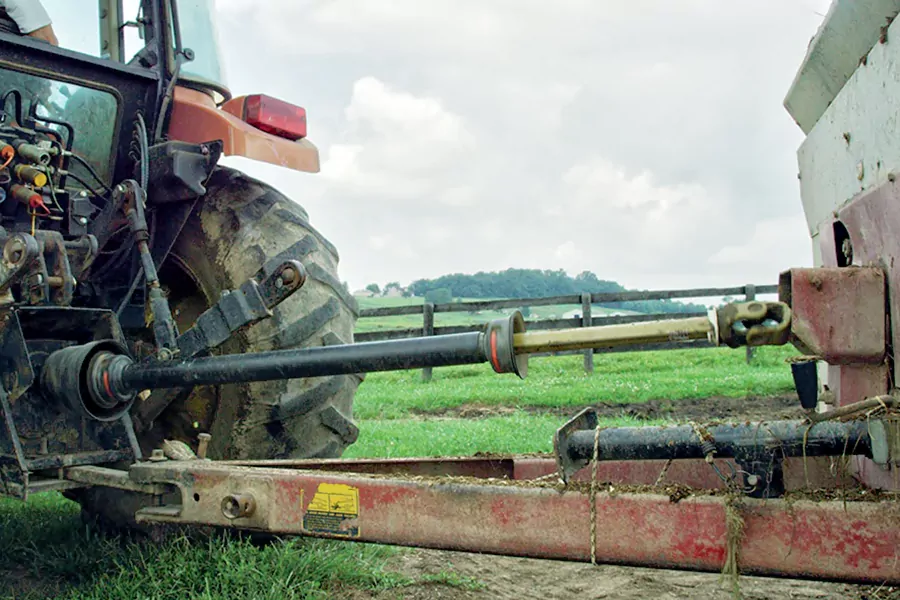
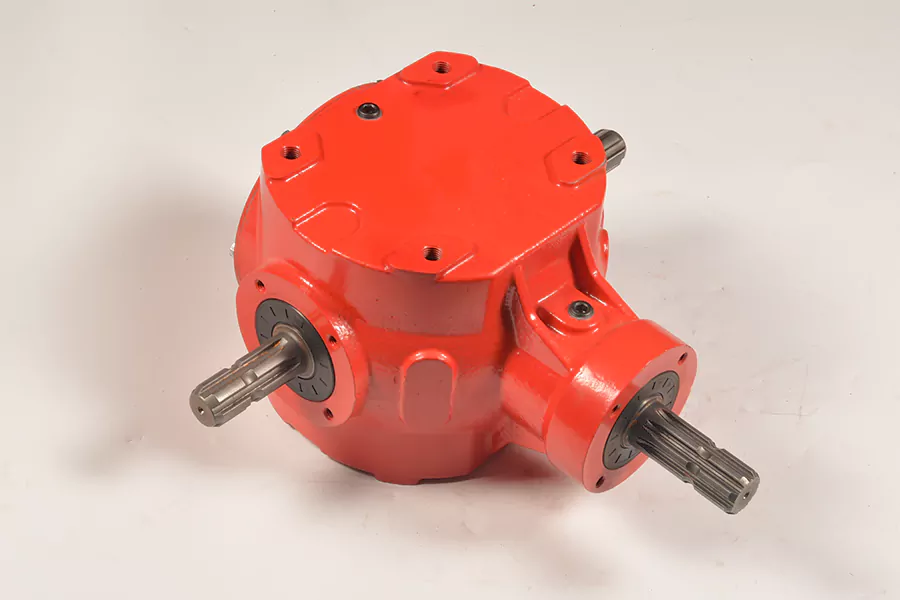
Chain selection is one piece of a bigger driveline. For machinery builders, distributors, and replacement-parts buyers, the chain has to work with the gearbox, the PTO shaft, and everything else turning.
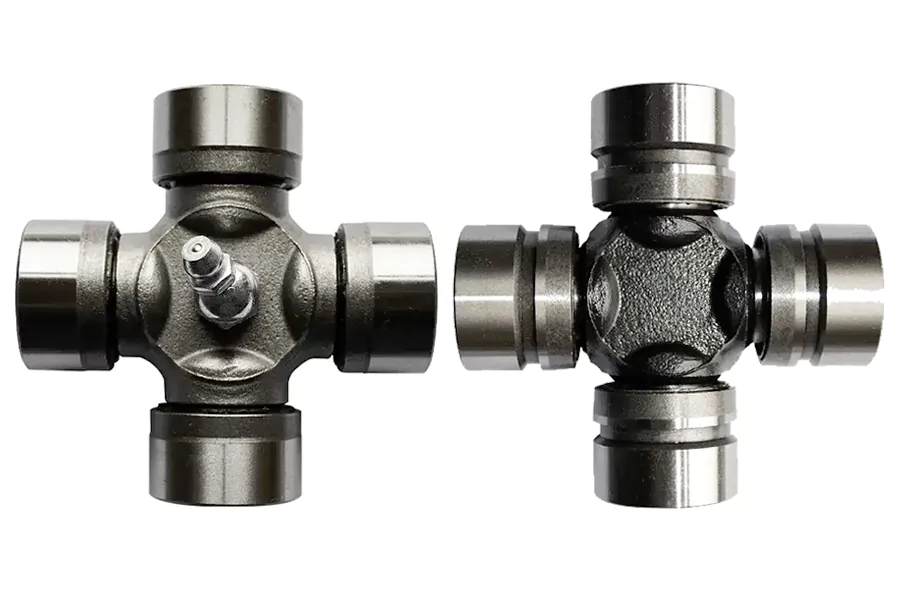
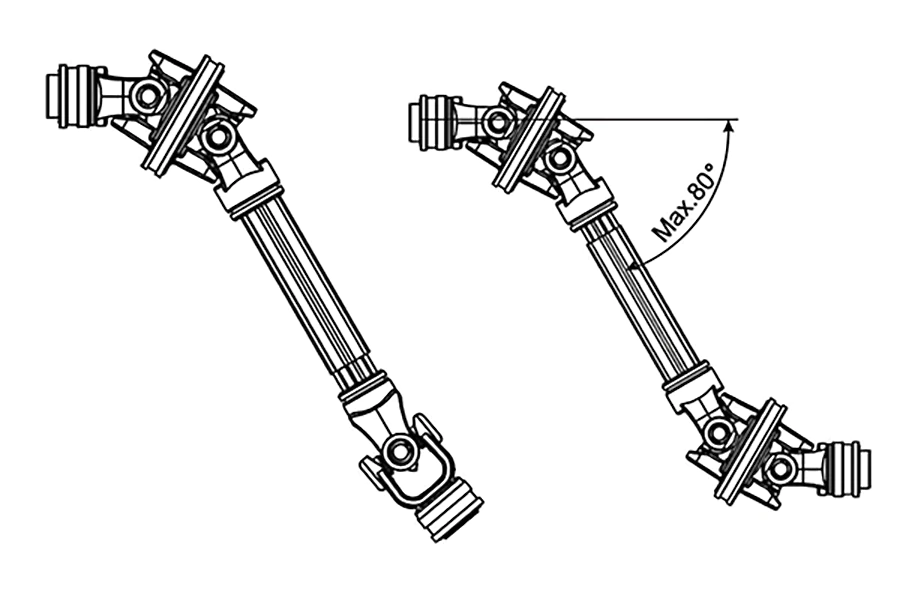
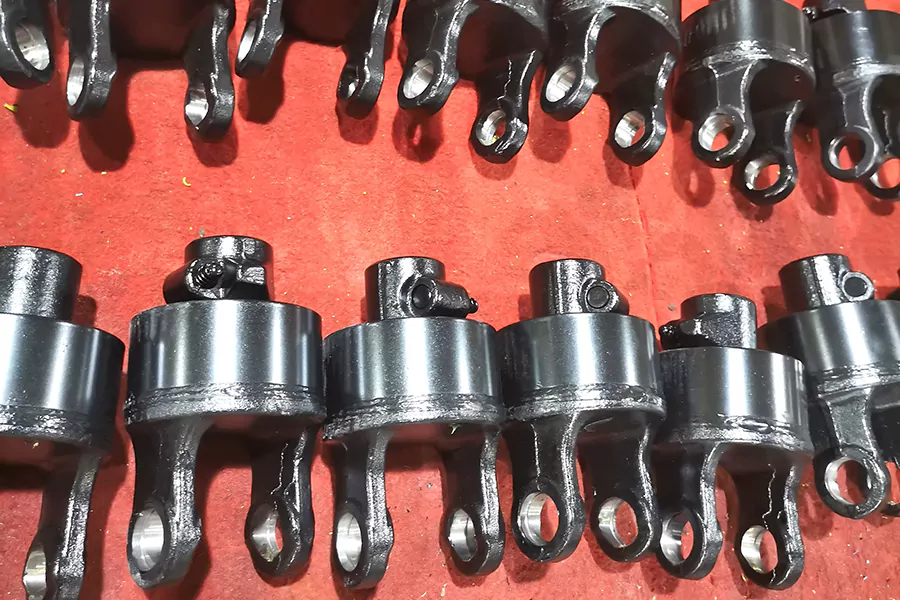
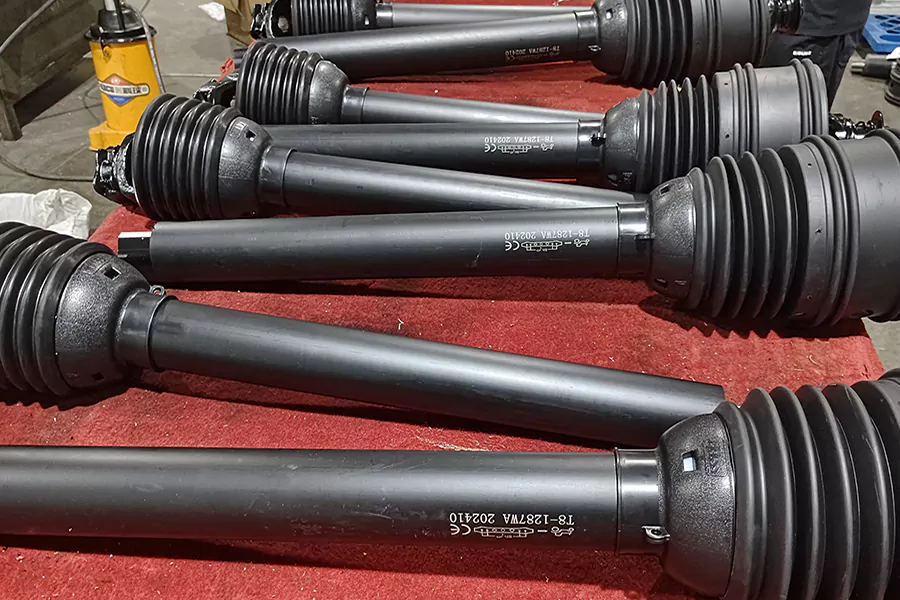
BAIQUAN makes agricultural and tractor parts out of China: gearboxes, PTO drive shafts, and the parts that go with them — chains, sprockets, bearings, yokes, universal joints, torque limiters, and splined shafts.
They run OEM/ODM support and will match components to how the equipment actually operates, with custom orders and technical help on replacement and driveline parts.
The point with any agricultural chain isn’t to buy the biggest or strongest one on the shelf. It’s to match pitch, chain type, sprocket geometry, load, speed, and the conditions it’ll work in. Get that right and the chain holds up through the season when you can’t afford to be down.