In many cases, a PTO sprocket does not fail suddenly. Most farmers and equipment dealers notice small changes first — a little more noise, slight vibration, or an implement that does not run as smoothly as before.
From our experience supplying agricultural transmission parts, many PTO sprocket replacements happen after operators have already used the machine for several seasons. The sprocket may still look usable from the outside, but worn teeth can gradually affect the entire drive system.
Knowing these early warning signs can help avoid unexpected downtime, especially during busy farming periods.
1. The PTO Area Starts Making Different Sounds
Experienced operators usually know the normal sound of their equipment. A healthy PTO system has a stable running noise. When something changes, the sound is often the first clue.
A worn PTO sprocket causes clicking, knocking or grinding noises, particularly when an implement is working under load.
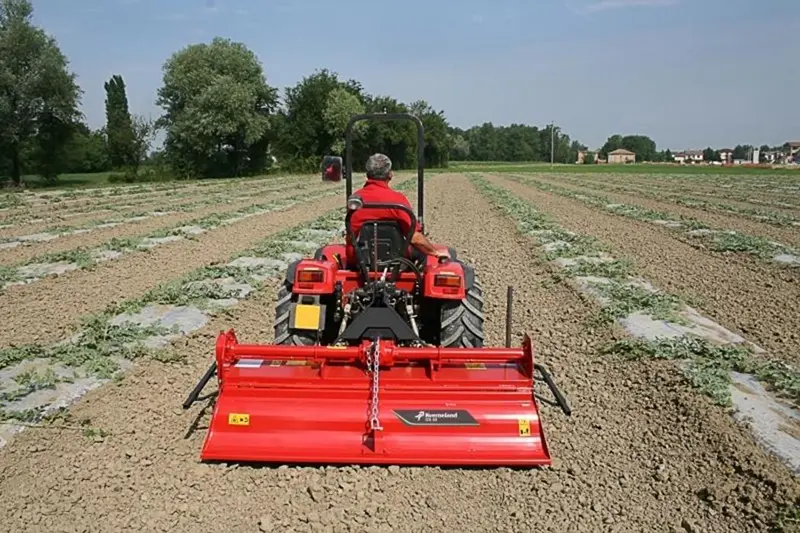
For example, a rotary tiller in hard soil works much more under load to a PTO sprocket and chain. If the sprocket teeth no longer engage smoothly with each other, the chain movement is un-even and leads to extra noises.
In the aftermarket, we often see customers replace chains first because the chain looks damaged. However, in many cases, the real cause is worn sprocket teeth. A new chain installed with an old sprocket usually will not provide a long-term solution.
2. Power Transfer Becomes Unstable
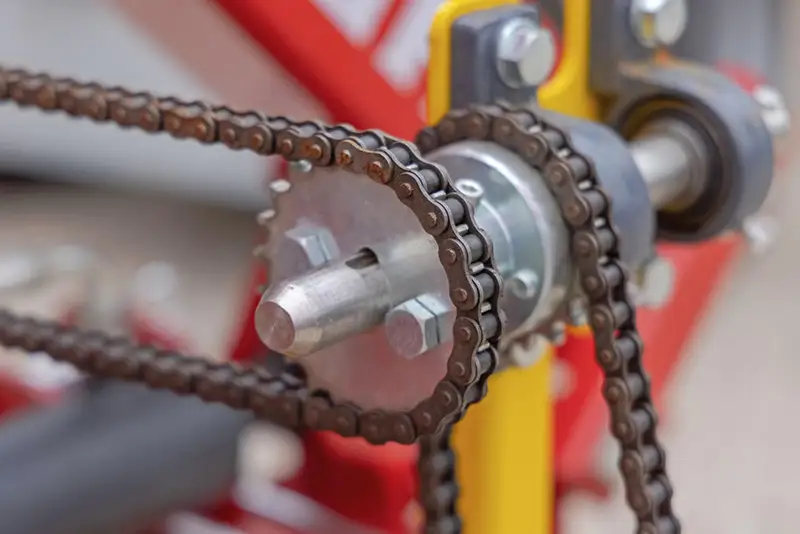
A PTO sprocket has one main job: transfer power from the tractor to the implement efficiently. When the teeth become worn, that connection becomes less reliable.
Operators may notice that the mower, tiller, or spreader does not maintain a consistent working speed. The equipment may perform normally during light work but lose smooth operation when the load increases.
This is a common issue with agricultural equipment because field conditions are rarely the same.
A machine that works well on soft ground may show problems immediately when it enters heavy soil or thicker crops.
From a replacement point of view, this is usually the stage where inspection is still simple and repair costs are relatively low.
3. Sprocket Teeth Show Visible Wear
A visual check can reveal many problems before a complete failure occurs.
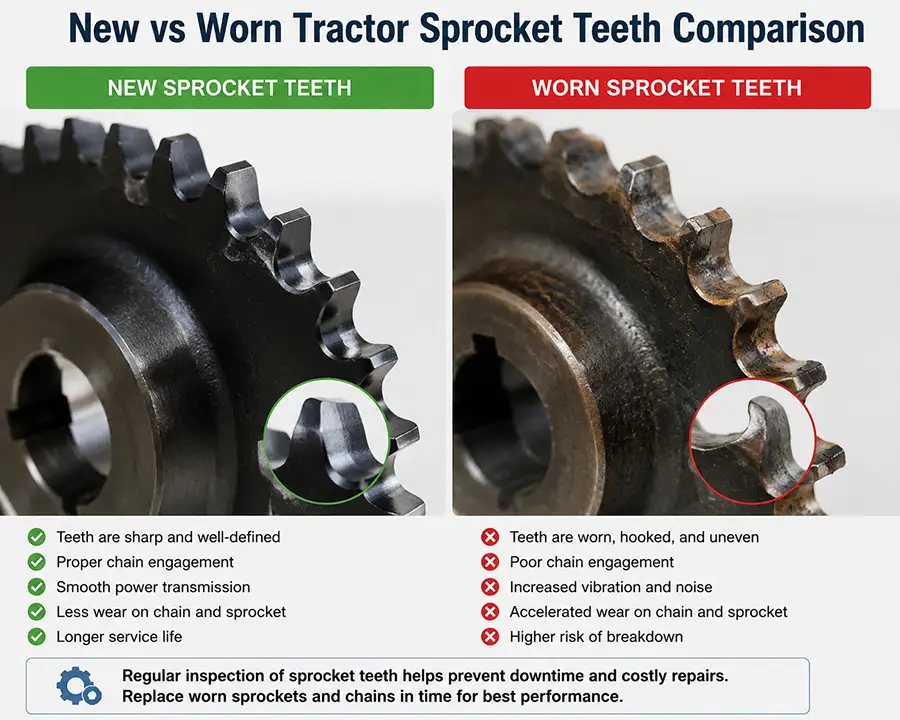
A good sprocket should have evenly shaped teeth with a clean contact surface. If the teeth become thin, pointed, uneven, or rounded, the sprocket is already losing its ability to work correctly.
One mistake we often see is replacing only damaged parts without checking the complete drive system.
A worn sprocket can accelerate chain wear, while a stretched chain can also damage a new sprocket.
For customers purchasing replacement PTO components, checking both parts together is usually the more reliable choice.
4. More Vibration During Operation
A PTO system should transfer power smoothly. Excessive vibration usually means that something in the rotating system is no longer working correctly.
A worn sprocket can create uneven chain movement, which transfers vibration through the PTO shaft and implement frame.
Operators may feel stronger shaking from equipment such as rotary cutters, tillers, and other PTO-driven machines.
Over time, this vibration can affect bearings, shafts, and gearbox components.
Many larger repairs start from a small vibration problem that was ignored for too long.
5. Chain Slipping or Frequent Adjustments
If the PTO chain keeps coming loose, skips during operation, or requires frequent adjustment, the sprocket condition should be checked.
When sprocket teeth cannot properly hold the chain, power transmission becomes unstable.
In serious cases, the chain may jump completely and stop the implement during operation.
For farmers and contractors, this type of failure is more than a parts problem.
Downtime during planting or harvesting seasons can create much higher costs than replacing a worn sprocket in advance.
How to Reduce PTO Sprocket Wear
Regular inspection is the easiest way to increase the life of a sprocket service.
Before each work season, inspect the sprocket, chain, lubrication and surroundings transmission.
Do not run implements beyond their capacity, since too heavy loads accelerate tooth wear.
When changing a PTO sprocket, always change its related parts at the same time.
The sprocket and chain matched correctly will increase performance and longevity of its service.
A PTO sprocket may be small but it has a big effect on machine reliability.
Any changes of noise, unstable power transmission, vibration, worn teeth and chain hint for checking before it becomes a small problem into a major repair.